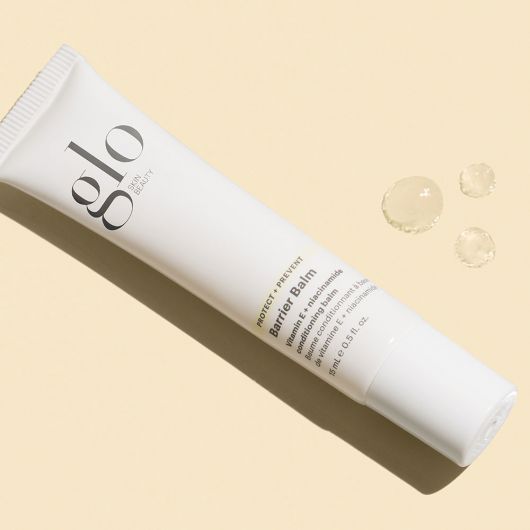
Petrolatum has the best evidence of anything for reducing water loss through the skin, and it has an undeserved bad reputation. When a barrier is broken, the priority is to seal it and stop, not to treat it with more actives. This is what I send people home with after a peel, and it is what I would reach for on any skin that is flaking and sore.
01 · Suitability
Is this the right product for you?
02 · Formulation
Key actives
| Active | What it does | Why we use it |
|---|---|---|
| PetrolatumPetrolatum | An occlusive that forms a physical seal, cutting water loss through the skin. | It is first on the list, and it is the ingredient doing most of the work here. Nothing outperforms it for sealing. |
| Bisabolol with niacinamideBisabolol, Niacinamide | A calming component of chamomile alongside niacinamide, which supports barrier comfort. | Sealing alone leaves the discomfort. These are what settle it. |
| Rosehip oil with squalaneRosa Canina (Rose Hip) Fruit Oil, Squalane | Two conditioning oils, one botanical and one that matches the skin's own. | They soften the balm and condition underneath the seal rather than sitting inertly on top. |
03 · What to expect
Results take time
Guidance based on consistent use paired with daily SPF. Individual results vary. Not a substitute for a clinical assessment.
04 · In a routine
Where it sits
Cleanse
Gently, nothing exfoliating
Treat
Skip actives entirely while the barrier recovers
Moisturise
Your usual cream
Barrier Balm
Last, over everything. Pea to coin sized
Treatment compatibility
Guidance only. Your practitioner's advice for your specific treatment always takes precedence.
05 · Questions
Common questions
No, and the reputation is undeserved. Cosmetic-grade petrolatum is highly refined, does not absorb, and has the strongest evidence of any ingredient for reducing water loss through the skin. It is what dermatology has used on damaged skin for a century. It does not clog pores in the way the internet suggests, though it is still not something to spread over congested skin.
When the barrier is struggling: after a peel or a treatment, after you have over-exfoliated, in cold weather, or on stubborn dry patches. It goes last, over your moisturiser, because nothing gets through it once it is on.
Yes, while you need it. Once the barrier has recovered, most people drop to two or three nights a week or use it only on dry patches. There is no harm in continuing, but there is usually no need.
Petrolatum, first on the ingredient list, which forms the seal and cuts water loss. Squalane and rosehip oil condition underneath it, and bisabolol and niacinamide settle the discomfort that comes with a broken barrier. It is a well-built occlusive balm, and the sealing is the point rather than any single active.
06 · Complete the routine